


While intuitive eating is a land without rules, learning how to navigate its waters is often challenging for those of us who’ve spent the last few years relying on macros, calories, and carb counts. How will I know when I’ve had enough to eat? Can I trust myself to stop eating? Will my body ever stop wanting pasta and mashed potatoes? Am I actually full, or should I keep going? My head is spinning just thinking about it.
To ease your way into intuitive eating, I’ve pulled together a list of four questions I use to filter my food choices before I eat — and that you might wish to use, too! I want to emphasize that these are not rules; they’re guidelines to help you become more intuitive about your food choices and to connect with your internal wisdom.
I really love these questions because they root me. They remind me of what’s essential when the noise of diet culture beckons me back. They allow me to pursue authentic health — my own authentic health — without regard for social expectations. If you’re struggling to move away from counting fat grams and hitting a specific protein target each day, you might find this both liberating and helpful.
QUESTION #1 – WHAT WOULD I LIKE TO EAT?
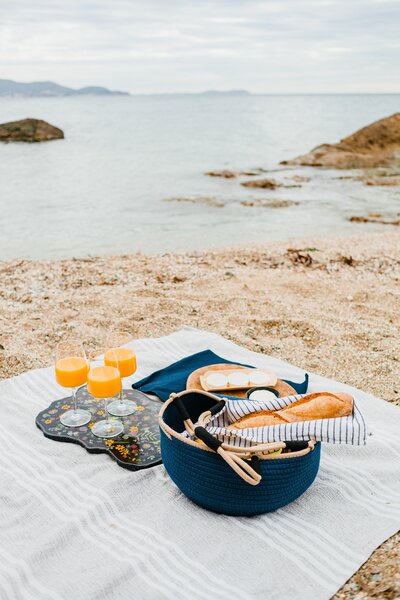
Due to various factors, like budget and availability, I’m going to bet you can’t always eat exactly what you would like. I mean, if I were feasting on plump peel-and-eat shrimp straight from the Gulf, dunked in warm garlic butter, a big fancy salad, red wine, and sweet potato fries. My reality? A re-heated black bean veggie burger sans bun, topped with mayonnaise and hot sauce — the furthest thing from a fancy al fresco lunch.
But you can get pretty close. What’s the temperature like outside? Do you have a hankering for something hot or cold? Crunchy or soft and easy to chew? Are you craving something tart and bright, or something spicy and bold? Would you like a dish that’s light and elegant, or hearty and filling? Plant-based or meat-heavy? Answering these questions will help you find absolute satisfaction in the foods you’re eating while giving your body what it needs to function optimally.
The problem with dieting is that we often think about what we should be eating (or shouldn’t!) and never ask ourselves what we feel like. I don’t want you to focus on macronutrients, micronutrients, and other things right now. I want you to ask yourself what you’d like to eat. Try to ignore your inner food police. Ignore your food rules. Ignore whatever your mind is telling you and try to listen to your core instincts.
If you find this question challenging, try entering into it as an anthropologist and explorer rather than a judge. Why do I want this food? What’s delicious about this food? How will this food satisfy me? Get nostalgic if you like. It’s fine to enjoy a grilled cheese sandwich and tomato soup, just as it’s fine to want a green smoothie or a hot dog with a ton of ketchup. Let your choices be what they are.
QUESTION #2 – HOW DO I WANT TO FEEL?
This is the next question I recommend filtering your choices through, because figuring out how foods feel is a BIG part of intuitive eating. Let’s say you love potato chips, but find they make you a bit bloated. This doesn’t mean you won’t eat them, but maybe you’ll reserve them for a time when it doesn’t matter so much. Perhaps you love wine, but know it gives you a headache and interferes with your work. This doesn’t mean you’ll never drink it, but maybe you’ll leave it for the weekend, when you can sit around and relax.
If you’re super new to intuitive eating, I recommend stopping at the first question. But if you’d like to proceed, begin to consider how foods feel to you. Which ones give you energy? What makes you feel amazing? Which foods keep you full? Which foods feel lighter in your stomach? Again, try exploring this rather than judging it, knowing what you uncover is a tool to help you navigate the world of intuitive eating — not a hard-and-fast rule.
The question of food allergies and sensitivities often comes up. How do I work on my relationship with food while honouring these issues? Awesome question. I think it still harkens back to how you want to feel vs. which rules you need to implement. If someone with Type II Diabetes eats too much sugar, they’ll feel sick. If I can’t tolerate dairy, I may avoid it for reasons that have nothing to do with diet culture and everything to do with how I want to feel.
I’ll admit this is tricky territory, but flipping externally motivated rules into internal cues is probably the best approach to co-existing with restrictions. Another would be to find satisfying substitutes so you don’t feel like you’re missing out. For example, there are several gluten-free options — donuts, ice cream cones, bread, cereal — for those with Celiac’s Disease and related issues, and dairy-free options — ice cream, yogurt, cheese, and so on — for those who cannot tolerate it. The goal is always satisfaction.
QUESTION #3 – WHAT DO I NEED TO DO?
Food is definitely pleasure, enjoyment, and love. But it’s also energy to fuel our focus, optimize our concentration, and allow us to do precisely what we need to do.
So you’ve decided what you feel like eating. And you know how you want to feel. Now, what do you need to do? Do you need to run a marathon? Work all day, all night in the office? Are you headed to the cottage?
I like considering this question because it helps me to view food as fuel. These are the raw materials from which I will build my extraordinary life. If I want to spend the afternoon really killing it, I may choose to eat a filling, sustaining lunch to help me do exactly that. If I plan to lounge around the house, get some laundry done, and organize my things (with a Netflix-and-popcorn date later, because #whynot), maybe I’ll be satisfied with something on the lighter side.
When filtering your choices, consider what you need to do. Do you have time to stop for a snack? Or do you have back-to-back client meetings? Are you having a late dinner, or are you the type to eat before 6 pm? Dieting often gives us set serving amounts, calories, and times. It can feel super awkward, then, to connect with our bodies and ask ourselves what we need to do and how much food we need to do those things.
This step is challenging, so try to go easy. Sometimes you’ll over-eat, or intentionally under-eat, but I think eventually you’ll get the hang of things. I’ve found that eating meals with more fat — which fills you up without leaving you feeling too full — can be helpful if you have a lot to do or need a meal that sticks.
QUESTION #4 – WILL I FEEL DEPRIVED IF I DON’T EAT IT?
This final filter is an important one, and possibly one of the most confusing. But you told me to eat whatever I damn well please! You told me to honour my hunger! You told me I have unconditional permission to eat! Right. I did. And I have no intention of pulling the rug from under you. But I also don’t heed all my cravings and desires, because I’m not hungry enough to eat them all, and because there’s a difference between wanting to eat a particular food and feeling like eating it. Namely, one is intellectual while the other is physical.
I love sour gummy candy. I would totally eat it daily. But then this wouldn’t actually be all that intuitive — it would be automatic. I would consume it on autopilot. And then I wouldn’t be all that satisfied by it when I did eat it, and I probably wouldn’t feel so good from all of the sugar. So I eat it when I feel like it (when I’m craving it!), and if I see it and feel lukewarm about it, I let it go. This is how I make most of my food decisions. I don’t always want potato chips, but when I do, I honour that choice. When do I like pasta? I honour it. But I try not to eat things I don’t actually want, even though I like them, because I’m after self-care and satisfying eating experiences, not just doing things for the hell of it.
This question isn’t meant to keep you from the foods you actually want, but to help you recognize when something is a choice and when it’s just another option.
To summarize:
-
What do I feel like?
-
How do I want to feel?
-
What do I need to do?
-
Will I feel deprived if I don’t eat it?
What do you think of these filters? Do you have any filters you run your food choices through before eating?

Nutritionist, Certified Intuitive Eating Counsellor, and Somatic Experiencing Practitioner specializing in disordered eating, body image, and food-related trauma.


Comments +