


One of the most common questions I get as a Certified Intuitive Eating Counsellor is: I’m giving myself unconditional permission to eat, but I’m still binge eating. What gives?
Can you relate?
First off, congratulations!
Since under-eating is the #1 reason for binge eating and feeling out of control around food, letting go of food rules and allowing yourself to eat the foods you crave is important for recovery from an eating disorder or dieting.
Learning about the different forms of food restriction, identifying where food restriction shows up for you, and slowly habituating “forbidden” foods are effective ways to stop binge eating.
But here’s the deal: trying to stop restricting on your own is like attempting to do therapy on yourself.
There’s a lot you might be able to do on your own…until you get stuck.
Maybe you’ve legalized food…and you’re still binge eating? Or you’ve “stopped restricting,” but your relationship with food has become more volatile than a Chrishell-Christine showdown?
In other words, what if you aren’t restricting food and still feel stressed around forbidden foods?
Here are 10 reasons you still feel out of control around food (even if you’re giving yourself unconditional permission to eat).
1. You’re still not meeting your physical needs
Hot take: It’s possible to “stop restricting” and still be under-eating.
Most diet plans recommend wildly inadequate calorie amounts. If you’ve been dieting, you’re probably used to getting by with far less than you need.
A regular and necessary amount of food can feel like a lot of food when you’re used to the calorie counts and portions prescribed by diets. It can also be more food than you are psychologically comfortable eating.
It’s easy to think you’re eating enough just because you’re eating French fries or ordering pizza. But it’s also possible to eat these foods and still under-eat overall. Eating a cheeseburger at the end of your workday doesn’t mean you ate enough for the day. Do you feel me?
If you have a history of filling up on vegetables and low-calorie foods, you may not have a real sense of what “enough food” looks like and feels like throughout the day. Eating more “forbidden” foods can give the illusion that you’re eating enough…even if it’s not true.
Depending on the plan you were following before, adding grains and starches to your regular diet may not feel natural. It may take some time to re-incorporate certain foods if you’ve been conditioned to go without them.
It may not even be that you believe they’re “bad” or that you shouldn’t eat them. You may rarely think to add them to your meals unless you’re craving a bowl of pasta or green curry over rice. Keep in mind that while carbohydrate needs vary from person to person and can change throughout the lifespan, we all need carbohydrates for energy and optimal brain function. This is also true for fat and protein, the other two macronutrients.
Nutritional rehabilitation is often discussed in eating disorder recovery. But people recovering from dieting or disordered eating also go through a nutritional rehabilitation stage. This isn’t discussed nearly enough. It’s common to need much more food during early diet recovery as your body repairs the damage from chronic under-eating. This might mean feeling the urge to eat more than you are physically comfortable eating, even if you feel physically and emotionally satisfied.
2. You’re still actively restricting
Here’s the deal: restriction, despite what you may have heard, isn’t just physical.
When people tell me they’ve stopped restricting, I often probe further to understand what they mean by the word. Many health providers have been taught that restriction is just physical, that binge eating will stop by eating a sufficient amount of calories alone.
Unfortunately, that’s not usually the case. For one thing, we need to consider hunger, appetite, fullness, and satisfaction — not just energy needs alone. Secondly, food is often overcoupled with other experiences in our lives. This usually needs to be unpacked and decoded for us to have a peaceful relationship with the food or foods in question, which is where nutrition therapy comes in.
Sometimes, people wonder why anti-diet nutrition professionals and Intuitive Eating Counsellors recommend making peace with all foods. The truth is, a preoccupation with nutritious eating can undoubtedly play a role in binge eating—and mask deeper issues.
3. You’re missing your hunger cues.
Hunger can present differently in people. While many people don’t know this, stomach growling is actually an advanced hunger cue. Before you experience stomach growling (many people rarely feel it), you might notice lightheadedness, poor concentration, low energy, or thoughts of food.
If you’re accustomed to eating very little during the day and often feel out of control around food all night, this is something to consider. Despite what diet culture might say, it is normal and necessary to eat throughout the day to meet our energy needs and maintain stable blood sugar levels. While some people tend to be naturally hungrier during the day, others are more interested in food in the evening. Different people have different eating patterns! — This isn’t a license to skip meals or suppress hunger pangs.
Lastly, if you’re used to under-eating and “low energy” is nothing new to you, you may mistakenly try to get more energy by loading up on caffeine. While “energy” is a multi-faceted topic and low energy isn’t necessarily a sign of under-eating alone, it’s something to consider if you’re “doing everything right” but still feel “crazy” around food.
4. You haven’t fully habituated to the food you’re bingeing.
If you’ve mainly legalized food and still find yourself bingeing on one specific food, it’s possible that you haven’t habituated yourself to that particular food yet. While I was going through my own recovery process, eating rice and bread was straightforward enough. But it took me a lot longer to habituate myself to candy and potato chips, two of my most restricted (and loved) foods.
It’s also possible that you carry restrictive thoughts about the particular food in question (see my second point). Some people feel out of control around food, even at the mere whisper of restriction.
That said, if you find yourself routinely binge eating some nut butter or some other hyper-palatable and energy-dense food, it’s possible you’re not eating enough generally (see my first point).
5. The food you’re bingeing or eating past fullness is over-coupled
As I mentioned, it’s common for foods to become overcoupled with other things in our lives. If you’re allowing yourself full, unconditional permission to eat but still struggle with one or several specific foods, the foods may be overcoupled with something else. In this case, eating more of the food in question may actually perpetuate the cycle rather than rectify it.
6. Your eating pattern hasn’t changed
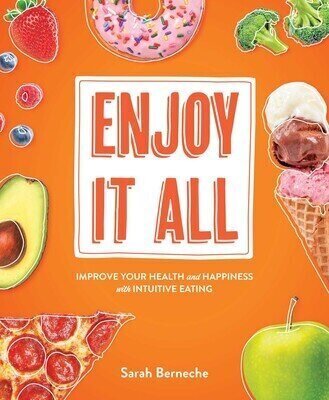
I speak more about this in my book, Enjoy It All: Improve Your Health and Happiness with Intuitive Eating, but here’s what I will say: categorizing foods as “regular” and “binge” foods is a form of restriction. If you only let yourself eat chocolate once per month, you’ll likely feel out of control around it. If you allow yourself pasta but impose some limit on it (e.g. time of day), you’re more likely to binge on it when presented with the opportunity.
7. Slowing down brings up feelings of discomfort, sadness, anger, and fear
So many people struggle with the concept of “relaxing” and really slowing down. Sometimes, slowing down can make many of us feel even more anxious. We start thinking about our to-do lists and everything we need to get done. We worry about our children, significant others, parents, or friends. For some people, the thought of really sitting down, consciously enjoying a meal, and eating until satisfaction can trigger dissociation. Others have difficulty being present with food and the emotions or sensations eating can provoke. This can lead to emotional eating or binge eating (or restriction — but that’s for another post.)
8. Lacking clarity around food needs
Adjacent to my seventh point and somewhat of a follow-up to my first and second points: we need to get clear on what we want to get satisfied with food. When you’re reaching for all the things, and nothing seems to satisfy (which in turn can evolve into emotional eating and/or binge eating), likely, you aren’t clear on what it is that you really wanted or needed at the moment.
Sometimes the clarity is food-specific (e.g., wanting a bowl of ice cream), and sometimes we want something else but gravitate toward food. To clarify, I don’t think there’s anything inherently wrong with using food to cope or heading toward food for comfort. It’s not the behaviours that concern me so much as the unmet needs and lack of satisfaction that remain when the food is gone. Getting clear about our needs around food (and otherwise) can help us feel fulfilled rather than as though something is missing.
9. Going toward food for something food can’t satisfy
Similar to my eighth point, binge eating or feeling generally out of control can also occur — even though you’ve legalized food — if you’re looking for food to satisfy something that it can’t. Food can become a stand-in for so many things (e.g. love, connection, a break, relief, friendship). Now, food can feel a lot like love when we’re deprived of connection and intimacy. There’s absolutely nothing wrong with that, and I think it’s essential to legalize eating as a strategy. But if what you need is rest, a break from work, or human connection, it may not be available to deliver, which can leave us unsatisfied and overeating to get what’s missing.
10. Some part of us feels triggered by attempts to eat to satisfaction
Eating to satisfaction and getting our food needs met can bring up all kinds of feelings and sensations. On the one hand, stopping at comfortable fullness can trigger us due to past experiences, leading us to finish the meal even when we are full. Sometimes, the thought of feeling satisfied with food can feel overwhelming. There are some reasons why eating “normally” — that is, according to hunger, appetite, fullness, and satisfaction — actually triggers binge eating or unsupportive eating behaviours even when we are not physically, emotionally/mentally, or unconsciously restricting.
Which of these points resonates most with you?
Want out of the diet cycle for good? Here’s how we can work together:
- Work with me 1:1. Together we’ll review your current relationship with food and your body, discuss your goals for our time together, and help you to feel safe with food and your body without #dietmath.
- New to Intuitive Eating and a non-diet approach? My book, Enjoy It All: Improve Your Health and Happiness with Intuitive Eating, offers a guide to finding lasting peace with food.
Related Posts:

Nutritionist, Certified Intuitive Eating Counsellor, and Somatic Experiencing Practitioner specializing in disordered eating, body image, and food-related trauma.




[…] Legalized Food, but Still Binge Eating? […]